Written by the Stay Wandery Editorial Team | Luxury Vacation Rental Properties, Sedona, Arizona | Updated August 2026
This guide is based on our experience as the team behind Stay Wandery in Sedona. Every week, we help guests figure out what to pack before they arrive, from the guest who showed up in flip-flops for a vortex hike to the family surprised by a 40-degree temperature swing in one day. The recommendations here combine our firsthand local insight with thorough research to help you build a Sedona trip packing list that actually works for the season you’re visiting.
Disclosure: Stay Wandery properties are our own vacation rentals, so they are featured because we know them best through daily operations and guest feedback. We also encourage you to explore the other accommodations mentioned throughout this guide to find the stay that best matches your travel plans. Seasonal information reflects the latest data available as of August 2026, though weather patterns and event schedules may change. We review and update this guide regularly to keep the information accurate and current.
What to Pack for Sedona (Any Season)
What to pack for Sedona is one of the first questions nearly every guest asks us before their trip, and it’s a fair question because Sedona doesn’t behave like a typical desert town.
We sit at roughly 4,350 feet in elevation, which means our mornings run cold even when the afternoon sun feels like summer.
We tell guests that packing solely for “hot Arizona weather” is the fastest way to find yourself shivering on a 7 a.m. trail. Others pack like they’re headed to the mountains and roast by noon.
Sedona’s weather swings by 25 to 35 degrees between sunrise and mid-afternoon on most days of the year, and your Sedona trip packing list needs to account for that swing more than the season itself.
This guide walks through what to wear in Sedona month by month, what gear actually matters for hiking and jeep tours, and what our guests wish they’d packed differently.
Sedona Weather: What to Pack Based on Elevation and Sun Exposure
Two things shape every packing decision here: elevation (roughly 4,350 feet, about 3,250 ft. higher than Phoenix, which keeps summers cooler and winters genuinely cold at night).
And UV exposure (altitude plus red rock reflection plus roughly 278 sunny days a year, per regional tourism sources, means sunburn happens faster than most visitors expect, even on cloudy days).
Here’s a season-by-season breakdown of typical temperatures, based on data compiled by NOAA, and our own observations hosting guests year-round.
| Season | Typical High | Typical Low | What to Expect |
| Spring (Mar–May) | 65–80°F | 38–48°F | Sunny with occasional wind and cool mornings |
| Summer (Jun–Aug) | 90–98°F | 60–68°F | Hot afternoons, cooler evenings, monsoon storms in July–Aug |
| Fall (Sep–Nov) | 68–88°F | 38–58°F | Mild days, chilly nights, best hiking weather |
| Winter (Dec–Feb) | 52–61°F | 29–35°F | Cold mornings, occasional light snow at higher points |
Temperatures are approximate averages and vary year to year. Always check a closer-range forecast the week of your trip.
What to Pack for Sedona in Spring (March, April, May)
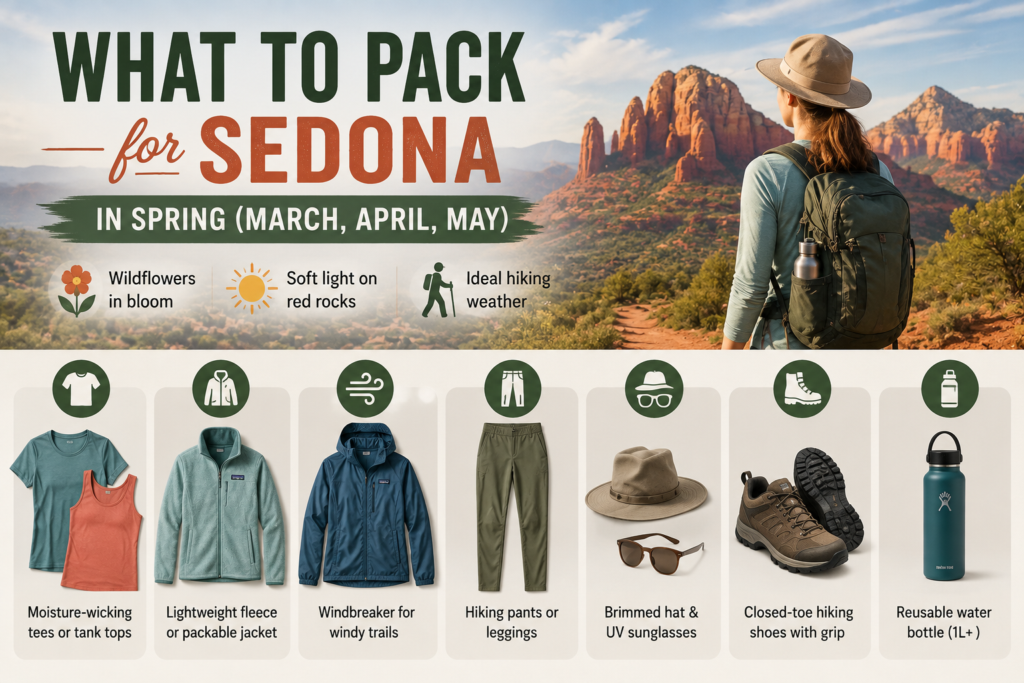
Spring is Sedona’s busiest season. Wildflowers appear along the trails, the light on the red rocks is soft, and daytime temperatures are close to ideal for hiking.
What should I wear to Sedona in March? Mornings can still dip into the high 30s, so treat it as a transitional month and pack like early April with slightly heavier layers.
What to pack for Sedona in April shifts toward warmer afternoons, with wind picking up on exposed trails and viewpoints.
Sedona packing list for spring:
- Moisture-wicking T-shirts or tank tops for afternoons
- A lightweight fleece or packable jacket for mornings and evenings
- A windbreaker, especially for jeep tours or exposed viewpoints like Airport Mesa
- Hiking pants or leggings that transition well between temperatures
- A brimmed hat and UV-protective sunglasses
- Closed-toe hiking shoes with grip (more on this below)
- Reusable water bottle, minimum 1 liter, more for hiking days
What We Tell Our Guests: Spring books out early, sometimes four to five months ahead for prime dates.
If you’re staying at one of our properties like SkyLine Sedona!, with king beds in every bedroom and wall-to-wall red rock views, we recommend locking in dates well before March hits. Spring weekends fill fastest of any season.

Every Stay Wandery property is built to wow. Across Palm Springs and Indio, our luxury rentals feature private waterslides and lazy rivers, themed game rooms, resort-style pools, hot tubs, and fire pits. The perfect setting for birthdays, family reunions, and group get-togethers.
What to Wear in Sedona in Summer (June, July, August)
Summer in Sedona is hot, but it’s a different kind of hot than Phoenix or Tucson.
Afternoon highs routinely stay in the 90s, with an average of roughly 20 days per year exceeding 100°F across June, July, and August, though evenings consistently cool back down into the 60s.
What to wear in Sedona in summer comes down to sun protection first, comfort second:
- Lightweight, breathable, light-colored clothing (dark colors absorb heat fast on the trail)
- UPF-rated sun shirts for longer hikes, especially on shadeless trails like Bell Rock
- Wide-brim hat, not just a baseball cap, for neck and ear coverage
- A cooling towel or bandana, genuinely useful in July and August
- Water shoes if visiting open creek access points, but check Forest Service alerts first: major Oak Creek Canyon recreation sites (including Banjo Bill, Bootlegger, Encinoso, Call of the Canyon, and Grasshopper Point) are currently closed due to post-Pocket Fire flood and debris flow hazards.
- A compact rain shell for monsoon season (mid-July through early September), when afternoon thunderstorms build quickly
Summer Heat Considerations: The most common mistake we see in summer is guests underestimating water needs.
Local hiking guides commonly recommend a minimum of one gallon of water per person for a full day out, more on strenuous trails.
Plan hikes for early morning, before 9 a.m., and save shopping or dining in Uptown for the heat of the afternoon.
We routinely remind guests staying at Uptown EPIC! to schedule pool time for the afternoon reset after a hot early-morning hike.
With two full kitchens and two game rooms across the two connected homes, it works well for large groups who want to split time between outdoor adventure and shaded downtime.
Sedona Packing List for Fall (September, October, November)
Fall is our team’s favorite season to recommend, and it’s when we get the fewest packing complaints from guests.
Temperatures moderate, crowds thin slightly compared to spring, and the cottonwoods along Oak Creek turn gold by mid-to-late October.
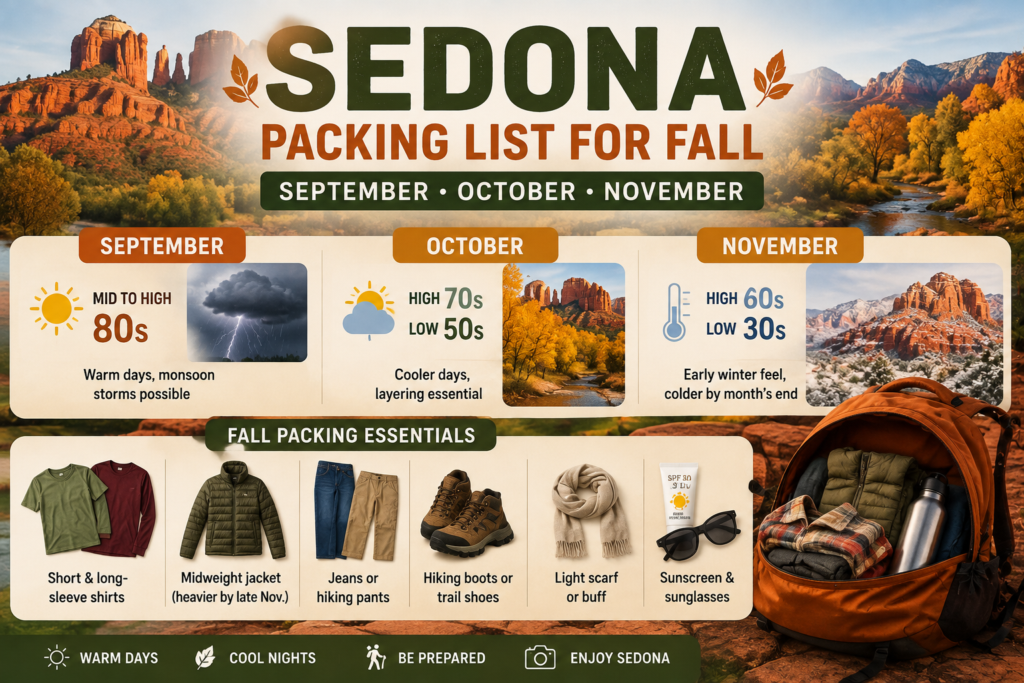
- What to pack for Sedona in September still leans warm, with highs commonly in the mid-to-high 80s and monsoon storms occasionally lingering into the first half of the month.
- What to pack for Sedona in October shifts: highs cool into the high 70s, lows drop into the low 50s, and layering becomes essential.
- What to pack for Sedona in November runs closer to early winter, with highs in the high 60s dropping toward the high 30s by month’s end.
Fall packing essentials:
- A mix of short and long-sleeve shirts
- A midweight jacket for evenings, heavier by late November
- Jeans or hiking pants (shorts still work for midday in September)
- Hiking boots or trail shoes with solid tread for sandstone surfaces
- A light scarf or buff for cooler mornings
- Sunscreen and sunglasses, still necessary even as temperatures drop
Fall Foliage & Trail Closure Warning: While Oak Creek Canyon along Highway 89A is traditionally famous for fall foliage, key trails and recreation sites in the area are currently closed following the Pocket Fire.
Marquee hikes, including West Fork Trail #108, Bear Sign, Dry Creek, HS Canyon, and Secret Canyon, remain off-limits due to severe flash flood and debris flow risks during rain events.
Check current Coconino National Forest closure orders before planning foliage trips.
What to Pack for Sedona in Winter (December, January, February)
Winter surprises visitors who picture Arizona as endless sunshine. Sedona does get cold, and it occasionally gets a light dusting of snow, though nowhere near the amounts seen in nearby Flagstaff, which sits roughly 2,700 feet higher.
What to pack for Sedona in December and into early January means planning for holiday crowds along with genuinely cold mornings, often in the low-to-mid 30s.
Winter Sedona packing list:
- An insulated jacket or puffer coat, not just a light layer
- A warm hat, gloves, and a scarf for early morning or evening outings
- Wool or thermal socks
- Sturdy, closed-toe boots with real traction (trails can be icy or slick after frost)
- Layers you can shed by midday, since afternoons often reach the high 50s to low 60s
- Microspikes if you’re planning shaded canyon hikes after a recent snowfall
What Visitors Often Don’t Realize: Snow on the red rocks rarely sticks around Sedona itself for more than a day or two, but shaded, north-facing sections of trails can stay icy for days after a storm.
Midday, once the sun has warmed exposed rock, is consistently the safest and most comfortable time to hike in winter.
Winter is also our slowest season for bookings, which means better nightly rates.
Starview Sedona! sits close to Tlaquepaque and offers a jumbo fire pit and an 8-person hot tub, both of which our winter guests use constantly to warm up after a chilly morning hike.
Sedona Weather: What to Pack for a Trip Any Time of Year
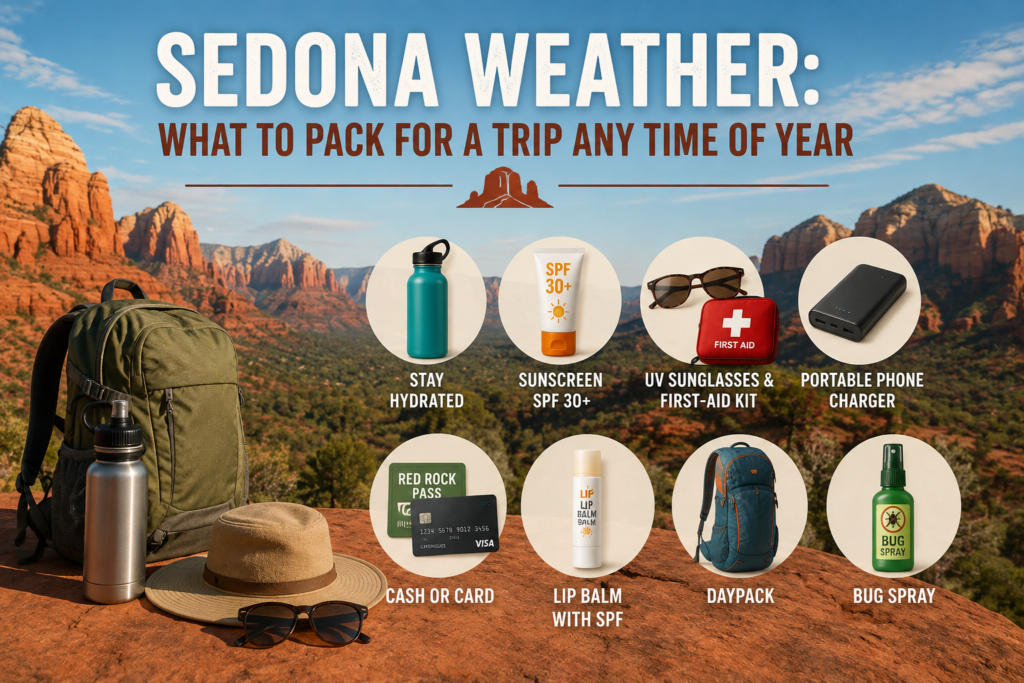
Regardless of season, a few items belong in every Sedona trip bag, and this is the backbone of any Sedona trip packing list.
- Reusable water bottle or hydration bladder
- Broad-spectrum sunscreen, SPF 30+, reapplied every 2 hours outdoors
- Sunglasses with UV protection and a basic first-aid kit with blister care
- Portable phone charger, since cell service is spotty on some trails
- Lip balm with SPF (the dry air here is more intense than expected)
Active Area Closures & Safety Notice: Due to the Pocket Fire burn scar, burn-area watersheds remain extremely vulnerable to flash flooding and rapid water rises during monsoon storms.
Multiple popular locations, including West Fork Trail #108, Bear Sign, Dry Creek, HS Canyon, and Secret Canyon trails, as well as Banjo Bill, Bootlegger, Encinoso, Call of the Canyon, and Grasshopper Point recreation sites, are closed until further notice.
Always consult official U.S. Forest Service updates before hitting the trail.
What to Pack for Sedona Hiking: Gear That Actually Matters
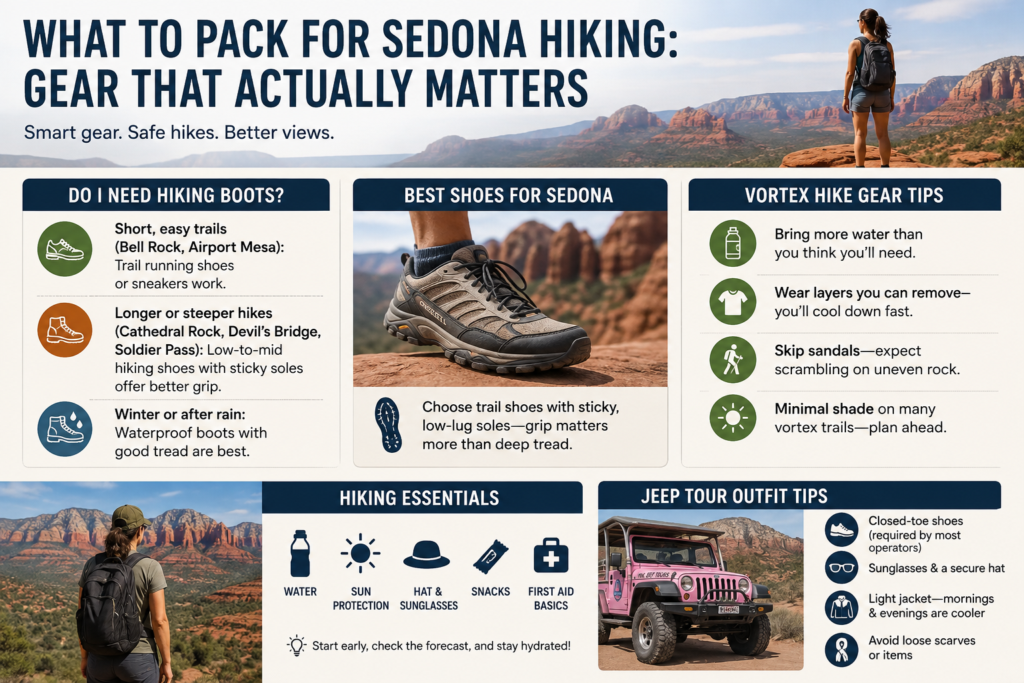
Hiking is the number one activity our guests ask about, and it’s also where packing mistakes cause the most discomfort.
Sedona’s trails are largely sandstone and loose gravel, which behaves differently than dirt or granite trails elsewhere.
Do I Need Hiking Boots for Sedona?
This is one of the most common questions we get, and the honest answer is: it depends on the trail.
- Short, well-maintained trails (Bell Rock Pathway, Airport Mesa summit walk): a supportive trail running shoe or sneaker with decent tread is usually enough.
- Longer or steeper hikes (Cathedral Rock, Devil’s Bridge, Soldier Pass): a low-to-mid hiking shoe with sticky rubber is essential for slickrock.
- Note that Cathedral Rock and Soldier Pass trailhead lots are closed to private vehicles during shuttle operating days, requiring use of the Sedona Shuttle (though Route 11 to Dry Creek/Devil’s Bridge and Route 14 to Soldier Pass are currently suspended)
- Winter or after rain: waterproof boots with real tread matter more, since wet sandstone loses grip fast.
Best Hiking Shoes for Sedona: Local guides and outdoor retailers frequently point to trail shoes with sticky, low-lug soles (similar to approach shoes used for rock scrambling) rather than heavy-lug boots, since the sandstone here rewards grip over deep tread.
If you already own a pair of trail runners with decent grip, they’ll likely serve you better than brand-new stiff boots.
Sedona Vortex Hike Gear: What’s Different
Vortex sites like Airport Mesa, Bell Rock, Cathedral Rock, and Boynton Canyon are regular hiking trails first, so the gear is the same as any other hike here.
Bring more water than you think you’ll need, since several vortex trails have minimal shade.
Wear layers you can remove, since guests often linger at the top for meditation or photos and cool down fast once they stop moving.
Skip sandals, since the final approach usually involves scrambling over uneven rock.
Sedona Jeep Tour Outfits: What Operators Recommend
Jeep tours are one of the most popular bookings for our guests, and outfit questions come up constantly.
- Closed-toe shoes, required by most operators including Pink Adventure Tours
- Sunglasses and a hat that won’t blow off in an open-air jeep
- A light jacket even in summer, since early morning and sunset departures run cooler
- Avoid loose scarves or anything that could catch on rollbars
The Question We Get Asked Most: “Can I wear sandals on a jeep tour?” The honest answer is most operators allow it, but we don’t recommend it.
The ride is bumpy, dusty, and involves some walking at photo stops. Closed-toe shoes make the whole experience more comfortable.
Sedona Outfit Ideas: What Do People Wear in Sedona?

What do people wear in Sedona day-to-day? Overwhelmingly casual. This isn’t a dressy town, and even guests visiting for a special occasion tend to lean toward elevated-casual rather than formal.
Daytime Sedona outfit ideas:
- Breathable layers: tank or tee, light overshirt, packable jacket
- Comfortable pants or leggings that move well for walking Uptown’s sloped sidewalks
- A sunhat that doubles as a photo prop (red rock backdrops are unavoidable here)
- Earth tones photograph beautifully against the rock formations, though this is purely aesthetic, not a rule
What to Wear to Dinner in Sedona
How should you dress for a night out in Sedona? Even our nicer restaurants, including well-reviewed spots in Uptown and the Village of Oak Creek, keep things resort-casual rather than formal.
- Collared shirts or a nice top with jeans work for most sit-down dinners
- A sundress or linen outfit is common and appropriate for warmer months
- A light jacket or wrap for outdoor patio seating after sunset, since temperatures drop fast once the sun goes down
- Sneakers or dress-casual shoes are generally fine; you’ll rarely need heels given the terrain and short walking distances from parking
Before You Book: If dinner reservations with a view are part of your plan, book well ahead. Restaurants with red rock patio seating routinely sell out their prime sunset slots one to two weeks in advance during spring and fall.
We always advise guests at Uptown Sparks! to plan at least one takeout evening on the viewing deck, as the red rock panorama rivals any restaurant patio in town.
Sedona Packing List for a Week: A Practical Breakdown
A Sedona packing list for a week needs a bit more strategy than a weekend trip, mostly around layering pieces you can mix and match rather than packing a fresh outfit for every day.
| Category | Quantity for 7 Days |
| T-shirts/tanks | 5–6 |
| Long-sleeve or layering shirts | 2–3 |
| Pants/leggings | 3 |
| Shorts (warm months) | 2 |
| Jacket/fleece | 1–2 |
| Hiking shoes | 1 pair |
| Casual/dinner shoes | 1 pair |
| Swimsuit | 1–2 |
| Sleepwear | 2–3 sets |
| Hat + sunglasses | 1 each |
A week also gives you enough time to do laundry partway through, which is one advantage of staying in a vacation rental over a hotel.
Properties like Uptown Splash! and SkyLine Sedona! feature in-unit laundry facilities so guests can travel light and refresh hiking layers mid-week.
Sedona Travel Essentials Beyond Clothing

A full Sedona travel essentials list goes beyond what to wear. A few things guests frequently ask us about:
- Cell service: Coverage is generally solid in town but spotty on remote trails. Download offline maps before heading out.
- Trailhead Access & Fees: Red Rock Passes ($5/day, $15/week) cover forest parking, but key trailheads like Cathedral Rock and Soldier Pass close parking lots during shuttle operating days.
- You must plan for the free Sedona Shuttle system rather than relying solely on trailhead parking (note: Routes 11 and 14 are currently non-operational).
- Reusable shopping bag: Handy for Uptown’s shops and the Tlaquepaque Arts & Shopping Village.
- A small day pack: Even for non-hikers, useful for carrying water and layers around town.
Verify Before Visiting: A fee proposal would take trailhead parking at Red Rock from $5 to $10 daily, $15 to $30 weekly, and $20 to $60 seasonally.
Also, the Red Rock Pass doesn’t cover the concessionaire sites.
Parking Reality Check: Uptown Sedona’s free public lots fill up fast on weekends, especially between 10 a.m. and 3 p.m.
Guests staying at Uptown Sparks! or Uptown EPIC! often just walk into Uptown instead of driving, since both are within easy walking distance of Main Street.
That alone removes one of the more frustrating parts of a Sedona day trip.
Where to Stay in Sedona: Stay Wandery’s Five Luxury Properties
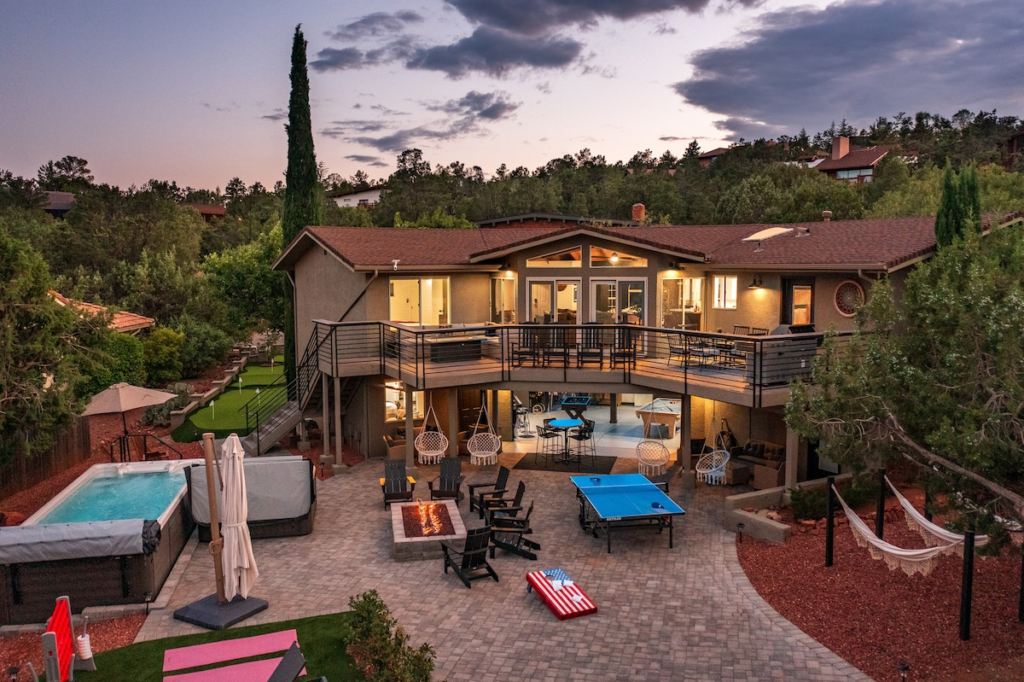
Packing the right gear only helps if you’re staying somewhere that supports your itinerary.
As the team behind Stay Wandery in Sedona, we manage five distinct luxury properties, each suited to a slightly different trip style.
- Uptown EPIC!: Two connected luxury homes sleeping up to 25 guests across 10 bedrooms and 8.5 bathrooms.
Features two 20-foot heated pools and spas, two full kitchens, two game rooms, fire pits, BBQs, and a putting green, all within walking distance of Uptown. Approximate starting rate: $2,242/night, 3-night minimum.
- Uptown Sparks!: Sleeps up to 13, with 5 bedrooms and 4.5 bathrooms.
A 20-foot heated pool and hot tub, a large viewing deck with red rock views, a firetable, and a fenced backyard. Approximate starting rate: $460/night, 3-night minimum.
- Starview Sedona!: Sleeps up to 12 across 4 bedrooms and 3 bathrooms, near Tlaquepaque.
Includes a 30×15 heated pool, an 8-person hot tub, an arcade room, pool table, and ping pong. Approximate starting rate: $560/night, 3-night minimum.
- SkyLine Sedona!: Sleeps up to 12 with 5 bedrooms (king bed in every room) and 4 bathrooms.
Wall-to-wall red rock views, a 30×15 heated pool and hot tub, two firepits, hammocks, and an arcade room. Approximate starting rate: $598/night, 3-night minimum.
- Uptown Splash!: Sleeps up to 12 across 5 bedrooms and 4 bathrooms.
A 20-foot heated pool and swim spa, huge viewing deck, putting green, fire pit, and a separate studio suite. Approximate starting rate: $460/night, 3-night minimum.
Rates listed are approximate starting nightly prices as of August 2026 and vary by season and availability.

All five properties include air conditioning, full kitchens, and free WiFi, key amenities that help us maintain a 4.4-star rating on Google and matter more than guests expect once they’re back from a hot hike and want to cool off or cook a meal.
Best For: Large multi-generational groups and reunions do best in Uptown EPIC!, given the dual kitchens and separate living spaces.
Smaller families or couples traveling with friends tend to gravitate toward Starview Sedona! or SkyLine Sedona! for the arcade rooms and more intimate pool areas.
Sample Weekend Sedona Itinerary: What to Wear Each Day
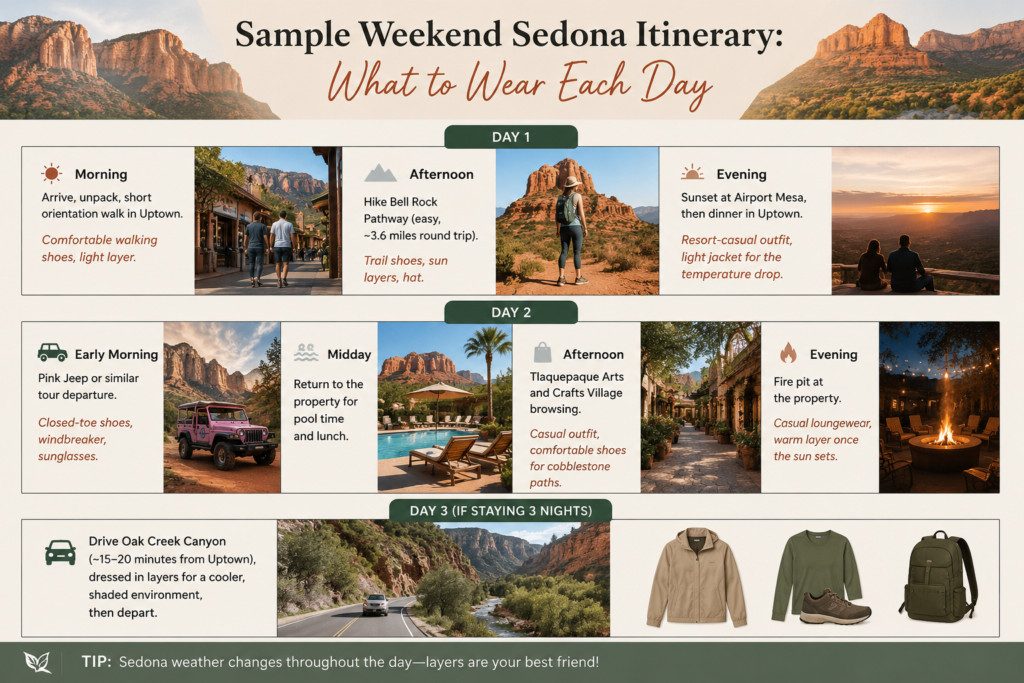
Here’s how a typical two-to-three-night weekend breaks down for guests staying with us, with what to actually wear for each part of the day.
- Day 1 morning: Arrive, unpack, short orientation walk in Uptown. Comfortable walking shoes, light layer.
- Day 1 afternoon: Hike Bell Rock Pathway. Trail shoes, sun layers, hat.
- Day 1 evening: Sunset at Airport Mesa, then dinner in Uptown. Resort-casual outfit, light jacket for the temperature drop.
- Day 2 early morning: Pink Jeep or similar tour departure. Closed-toe shoes, windbreaker, sunglasses.
- Day 2 midday: Return to the property for pool time and lunch.
- Day 2 afternoon: Tlaquepaque Arts and Crafts Village browsing. Casual outfit, comfortable shoes for cobblestone paths.
- Day 2 evening: Fire pit at the property. Casual loungewear, warm layer once the sun sets.
- Day 3 (if staying 3 nights): Drive Oak Creek Canyon, roughly 15 to 20 minutes from Uptown, dressed in layers for a cooler, shaded environment, then depart.
Your Sedona Trip Starts With the Right Packing List
Packing for Sedona comes down to one habit more than any single item: layering for a temperature swing that catches most first-time visitors off guard.
Whatever season you’re visiting, from a warm September afternoon to a crisp December morning, the same principle applies.
Start with a breathable base layer, add something warm for mornings and evenings, and carry more water and sun protection than feels necessary.
We’ve watched enough guests arrive underprepared, and just as many arrive with a dialed-in bag, to know the difference it makes for how much you actually enjoy the trip.
If you’re staying with us at Stay Wandery, our team is happy to answer last-minute packing questions before you arrive, and our five Sedona properties are set up to make the in-between moments, pool time, firepit evenings, cooking a meal, just as comfortable as the hikes themselves.
Whatever you forget, Uptown Sedona has outfitters, pharmacies, and outdoor shops within a short walk or drive of most of our Sedona properties, so a packing miss rarely turns into a real problem.
FAQs | What to Pack for Sedona (Any Season)
1. What do people wear in Sedona day to day?
Mostly casual, breathable layers. Locals and repeat visitors lean toward moisture-wicking shirts, comfortable pants or shorts, and closed-toe shoes for Uptown’s sloped, uneven sidewalks. Formal wear is rarely needed anywhere in town, even for nicer dinners.
2. Do I need hiking boots for Sedona, or will sneakers work?
For short, flat trails, supportive sneakers are usually fine. For longer or steeper hikes on slickrock, a low hiking shoe with a sticky rubber sole grips better than a sneaker or heavy-lug boot. Waterproof boots matter most in winter or after rain.
3. What should I wear to Sedona in March?
Treat March like an early spring transition month. Mornings often sit in the high 30s to low 40s, while afternoons can reach the mid-60s to low 70s. Layers you can add and remove throughout the day work better than one heavy outfit.
4. How should I dress for a night out in Sedona?
Resort-casual works almost everywhere. Jeans or nice pants with a collared shirt or blouse cover most restaurants. Bring a light jacket or wrap for patio seating, since evening temperatures drop quickly once the sun goes down, even in summer.
5. What to pack for Sedona in October specifically?
October sits in the shoulder season between warm September and cool November. Expect highs in the high 70s and lows near 50°F. Pack a mix of short sleeves for midday and a midweight jacket for morning and evening, plus layers for the changing fall foliage drives.
6. Is Sedona colder than Phoenix?
Yes, consistently. Sedona’s elevation of roughly 4,350 feet keeps it 10 to 15 degrees cooler than Phoenix on most days, particularly in summer, when Phoenix highs often exceed 105°F while Sedona stays in the low-to-mid 90s.
7. What to pack for Sedona in December, especially around the holidays?
December brings genuinely cold mornings, often in the low 30s, with afternoons warming into the 50s. Pack an insulated jacket, gloves, and a hat, plus layers for daytime warmth. Holiday week also brings heavier foot traffic in Uptown, so comfortable walking shoes matter.
8. Do I need special gear for a Sedona vortex hike?
Not beyond standard hiking gear. Vortex trails like Bell Rock and Airport Mesa are physically the same as any red rock trail, so the same shoes, water, and sun protection apply. The main difference is that visitors often linger longer at the summit for meditation, so an extra layer for when you stop moving helps.
9. What’s the biggest packing mistake first-time Sedona visitors make?
Underestimating the temperature swing between morning and afternoon. Guests frequently pack for one temperature and get caught off guard by a 25 to 35 degree shift within the same day. Layering solves this better than any single “right” outfit.
10. How many days of clothes do I need for a Sedona packing list for a week?
Plan for roughly five to six mixable tops, three bottoms, two jacket weights, and one to two pairs of shoes (one for hiking, one for casual wear or dinner). Most of our properties, including Uptown Splash! and SkyLine Sedona!, include in-unit laundry, so a full week of fresh outfits isn’t necessary.
Sources Consulted:
- NOAA
- Visit Sedona
- Azstatepark
- U.S. Forest Service Red Rock Pass Program (via Visit Sedona)
- Pink Jeep Tours
- Our team’s operational experience hosting guests at Stay Wandery, Sedona